Launch Sequence and phases
When a spacecraft is launched it goes through several Key events during launch. In this topic, we going to look at these key events. In this sequence will make use of the Mars Odyssey launch sequence.
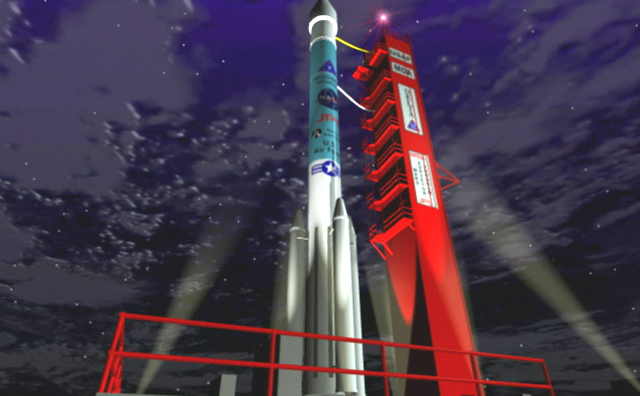
1) LaunchPad
The Boeing Delta II launch vehicle consists of three stages stacked on top of each other, plus 9 small solid-fuel rockets strapped to the outside of the first stage. Each of the four solid rocket motors is 1 meter (3.28 feet) in diameter and 13 meters (42.6 feet) long; each contains 11,765 kilograms (25,937 pounds) of hydroxyl-terminated polybutadiene (HTPB) propellant and provides an average thrust of 485,458 newtons (109,135 pounds) at sea level. The casings on the solid rocket motors are made of lightweight graphite epoxy.
At the very top of this “stack” is the spacecraft, inside a protective metal shell. Mars Odyssey’s main structure, or bus, is 1.7 meters (5.6 feet) tall, 2.6 meters (8.5 feet) wide, and 2.2 meters (7.2 feet) deep. At launch, it will weigh 725 kilograms (1,598 pounds), consisting of the 332-kilogram (731-pound) dry spacecraft plus 349 kilograms (769 pounds) of fuel.
Before Launch
Each stage has its own rocket motor. The first two stages use liquid rocket fuel. The third stage uses solid rocket fuel. Each stage will be fueled and pressurized and made ready for launch. This process can go on until a few minuets before launch.
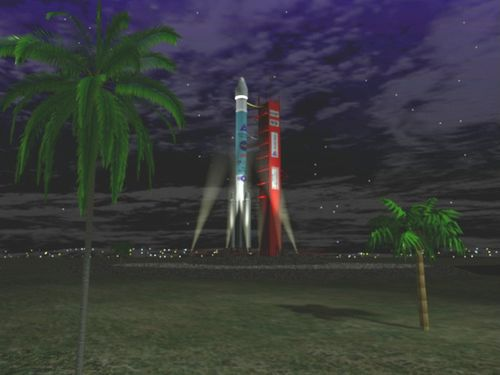
Launch
At T – 0, all engines will fire up and the craft will launch. As each stage’s rocket is fired, and its fuel supply is exhausted, it is discarded.
Burnout and Jettison of Solid Rock Motors
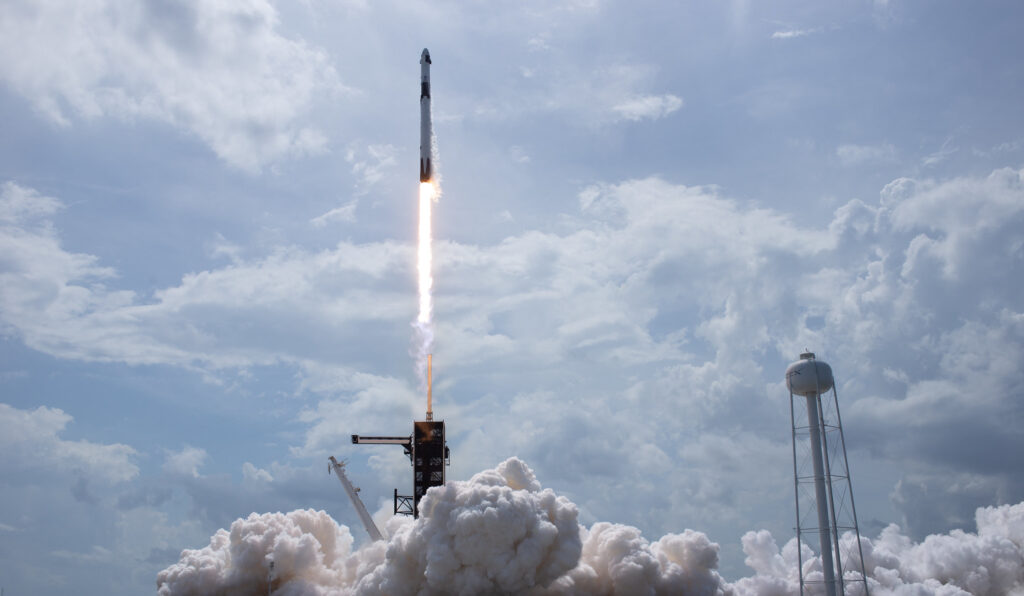
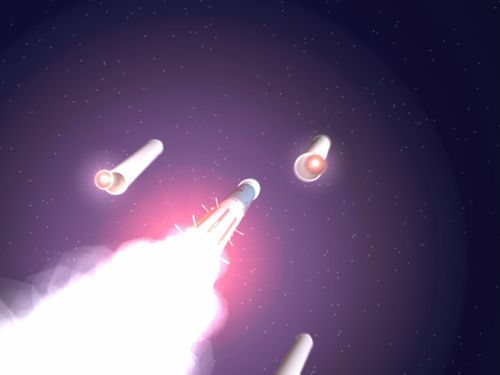
Sixty-six seconds after liftoff the 6 solid rocket “strap-ons” are discarded and fall into the ocean. Three of the six solid rocket strap-ons will be discarded first, and the other three strap-on boosters will be jettisoned one second later, while the first stage continues to burn. At this point, the launch vehicle will be at an altitude of 18.5 km and traveling at a velocity of 3,591 km/hour. The final three rocket boosters are then ignited, and then jettisoned, about 2 minutes, 12 seconds after launch.
Prior to Main Engine Cutoff (MECO)
The central first stage continues to burn for over 4 minutes. The main body of the first stage is 2.4 meters (8 feet) in diameter and 26.1 meters (85.6 feet) long. It is powered by an RS-27A engine, which uses 96,000 kilograms (211,000 pounds) of RP-1 (rocket propellant 1, a highly refined kerosene) and liquid oxygen as its fuel and oxidizer.
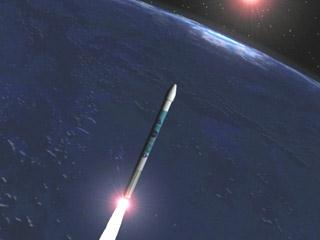
After Main Engine Cutoff (MECO) (First Stage Separation)
4.4 minutes after liftoff the first stage shuts itself off (main engine cutoff) and is discarded (first stage separation). The spacecraft is now at an altitude of 125 km (77 miles) and traveling at a velocity of 21,475 km/hour. One stage down, two more to go!
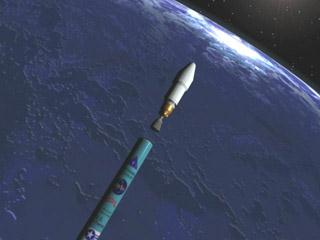
Second Stage Ignition
13.5 seconds following the main engine cutoff, the second stage is fired. The second stage is 2.4 meters (8 feet) in diameter and 6 meters (19.7 feet) long and is powered by an AJ10-118K engine. The propellant is 3,929 kilograms (8,655 pounds) of Aerozine 50 (A-50), a 50/50 mixture of hydrazine and unsymmetrical dimethyl hydrazine (UDMH). The oxidizer is 2,101 kilograms (4,628 pounds) of nitrogen tetroxide. The engine is restartable and will perform two separate burns during the launch.
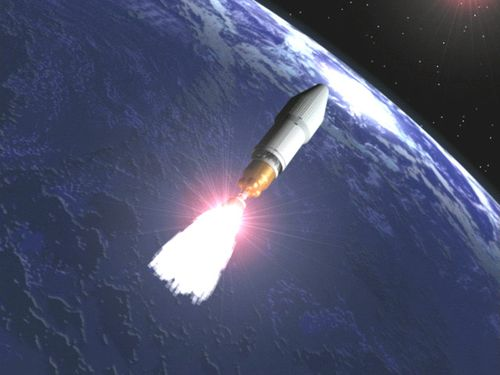
Jettison of Fairings
The metal shell (fairings) covering the spacecraft is discarded 4.5 seconds after the second stage ignition.
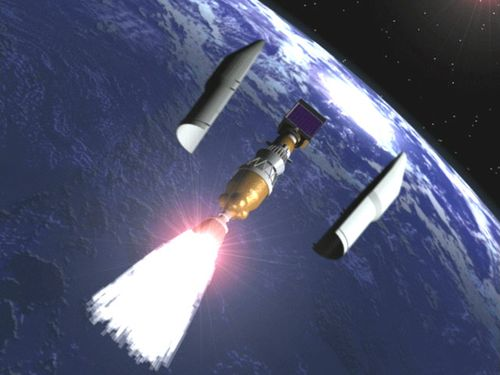
Prior to Second Stage Engine Cutoff (SECO)
The second-stage burn ends about 10 minutes after liftoff. At this point, the vehicle will be in a low-Earth orbit at an altitude of 189 kilometers (117 miles). Depending on the actual launch date and time, the vehicle will then coast for several minutes. Once the vehicle is at the correct point in its orbit, the second stage will be restarted for a brief second burn.
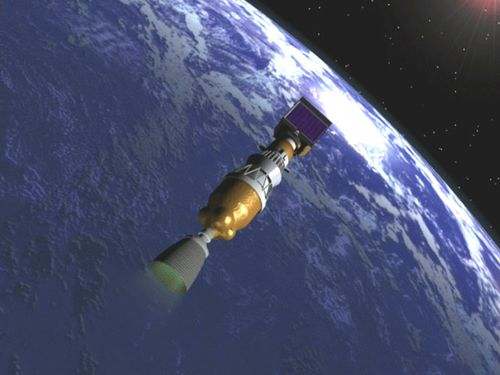
Firing of Spin Motors
Before the third stage’s rocket is fired to get the spacecraft out of Earth orbit and on its way to Mars, it has to be “spun up” first. Small rockets are used to make the third stage spin about its long axis. Actually, the third stage will spin on the turntable attached to the second stage.
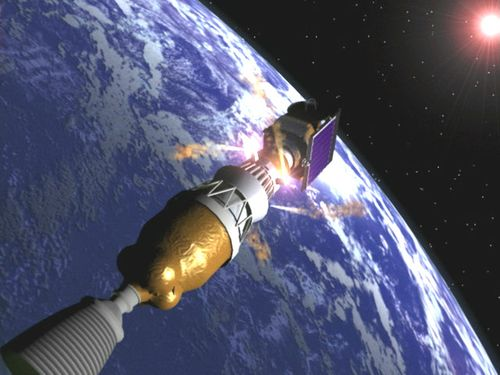
Jettison of Second Stage
After the third stage “spin up”, the second stage is jettisoned.
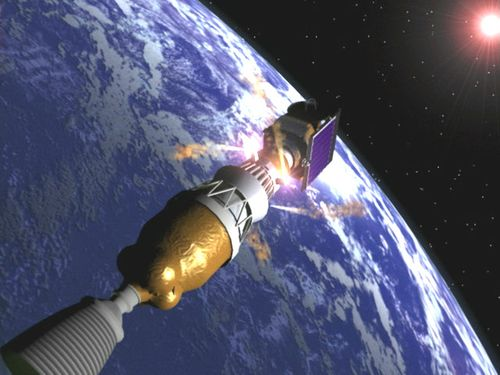
Third Stage Ignition
The third and final stage of the Delta 7925 is a Thiokol Star 48B booster, the same final stage used in the 1996 launch of Mars Global Surveyor. The Star 48B measures 2.12 meters (84 inches) long and 1.25 meters (4.1 feet) wide. Its motor carries a solid propellant composed of a mixture of aluminum, ammonium perchlorate, and hydroxyl-terminated polybutadiene (HTPB) solid propellant. The spinning third stage separates from the second stage, and the third stage motor ignites, sending the vehicle out of Earth orbit. The reason we want the vehicle to spin during this burn is so it stays pointed where we need it to point. Spinning it stabilizes it as a spinning bullet fired from a rifle. A nutation control system (a thruster on an arm mounted on the side of the third stage) will be used to maintain stability during this final burn.
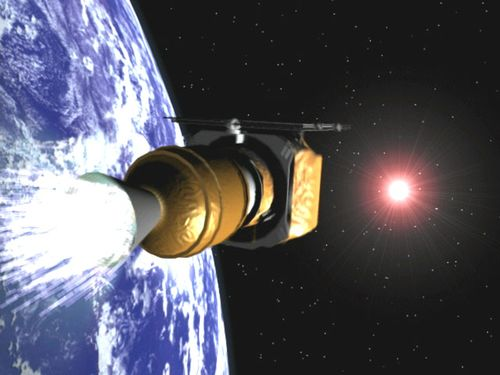
Third Stage Burnout
Now, the third stage, with its solid rocket fuel exhausted, and with the spacecraft attached, are on its way to Mars. However, the spinning upper stage and the attached Mars Odyssey Orbiter must now be despun so that the spacecraft can be separated and acquire its proper cruise orientation.
Yo-Yo Despin of Spacecraft
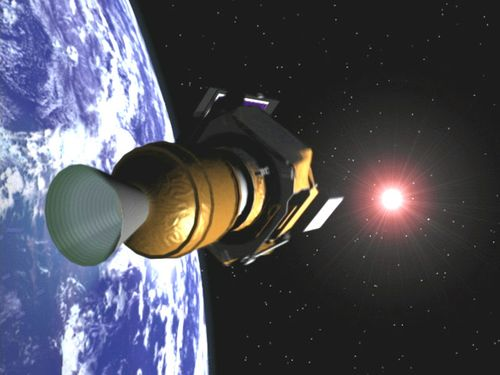
Despinning is accomplished by reeling out weights on the end of tethers (like yo-yos) attached to the third stage. This slows the rocket’s spin, the same way a spinning ice skater slows if she extends her arms away from her body.
Jettison of Third Stage
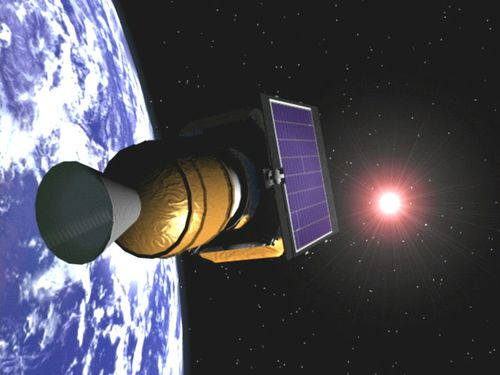
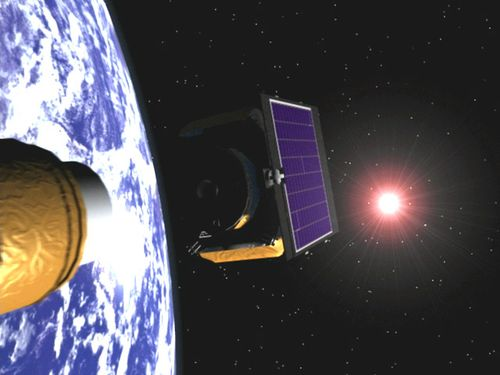
Approximately 30 minutes after liftoff, Mars Odyssey Orbiter will separate from the Delta’s third stage. Any remaining spin will be removed using the orbiter’s onboard thrusters.
Cruise Phase
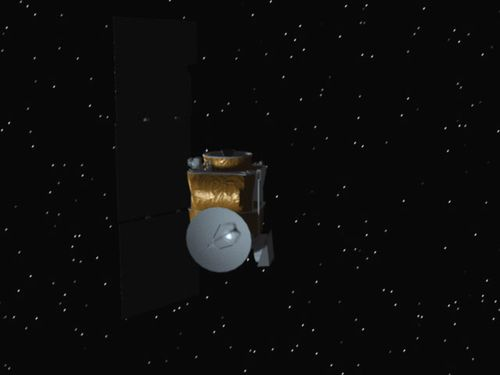
About 5 minutes after third-stage separation, the spacecraft’s solar array will be unfolded. An eight-minute onboard operation will orient the solar array toward the Sun for power. Shortly thereafter, the 34-meter-diameter (112-foot) antenna at the Deep Space Network complex near Canberra, Australia, will acquire Mars Odyssey’s signal.
They are other phases depending on the function of each craft, these are such as docking.